
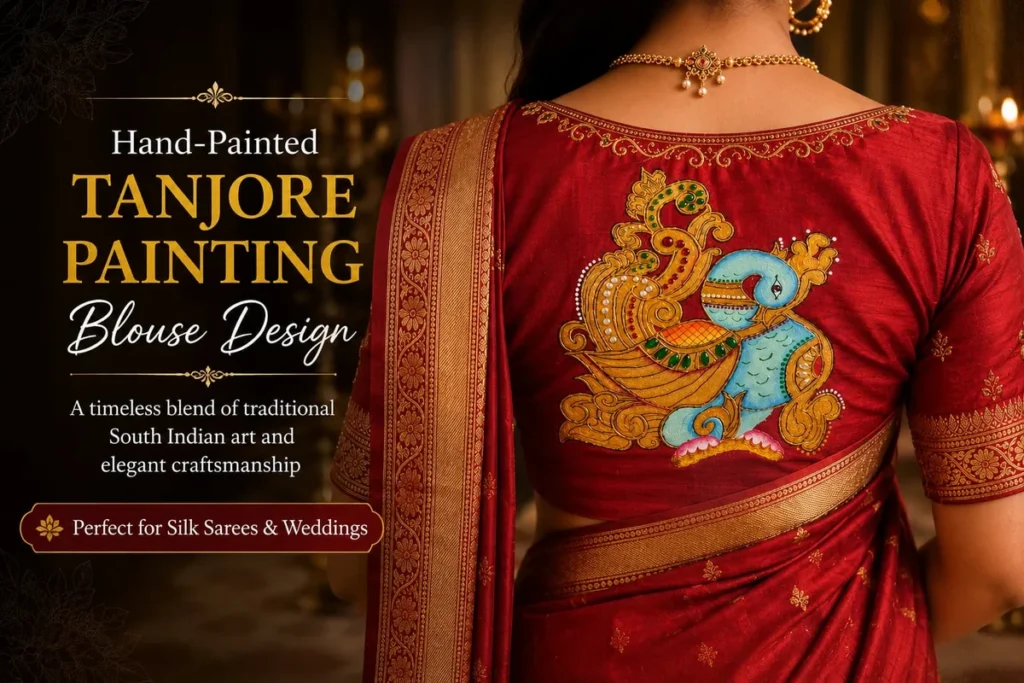
I was digging through my closet looking for something that felt special enough for a wedding guest outfit when I spotted a plain silk blouse I’d bought months ago and never really styled. It sat there, perfectly nice and completely forgettable.
That’s when the idea hit me: what if I turned it into a piece of wearable art?
What is Tanjore Painting?
Tanjore painting is one of South India’s most celebrated traditional art forms, dating back several centuries. It got its name from Thanjavur (also called Tanjore), a city in Tamil Nadu where the Chola, Nayaka, and Maratha rulers kept it thriving. The paintings are known for bold colours, intricate detailing, and — this is the signature part — 22-carat gold foil that gives everything a luminous, almost royal finish.
Traditionally they depict Hindu deities, saints, and mythological scenes. During the British colonial period some European influences crept into composition and perspective, but Tanjore painting has kept its own identity intact.
Why I Tried Painting on Fabric
About fifteen years ago, I painted a traditional Tanjore piece of Goddess Saraswati on wood using genuine gold foil. That experience stuck with me. I kept wondering: what if this art could live on fabric instead of a wooden panel?
So when I saw hand-painted Tanjore sarees and blouses trending, I knew I had to try it myself.
The Blouse I Created
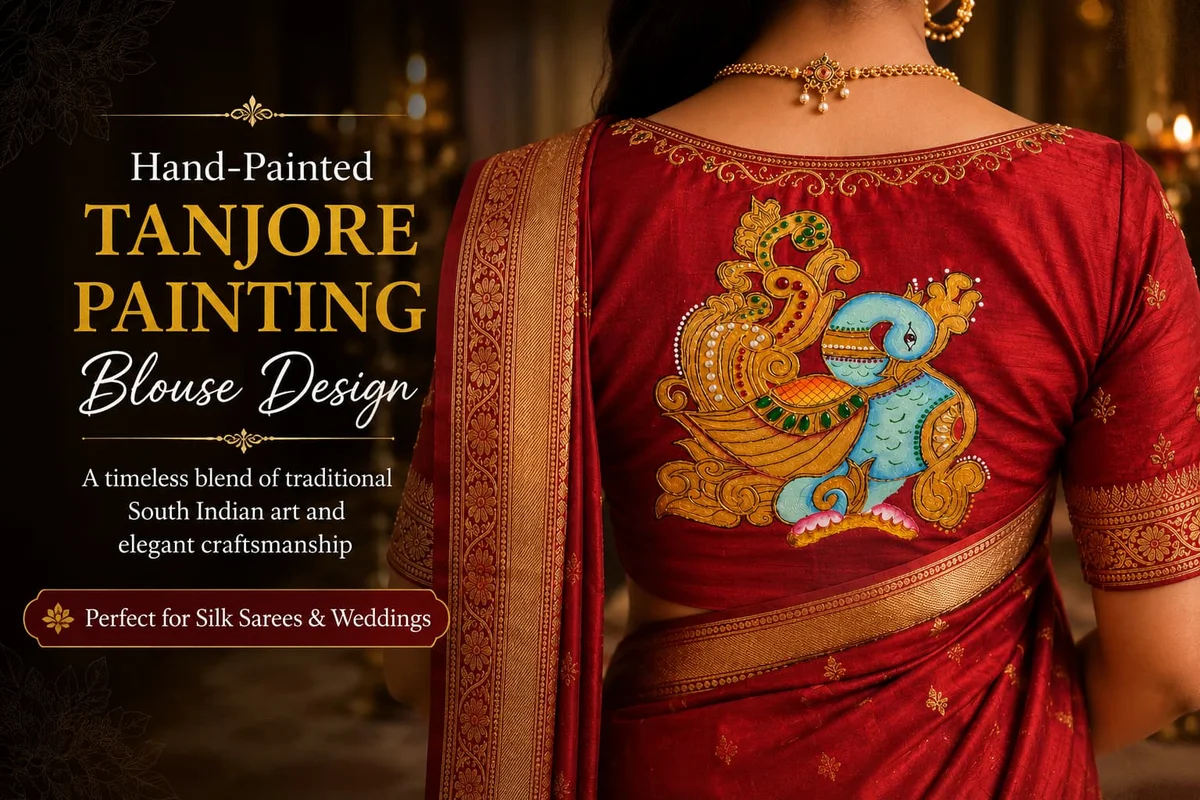
I picked a peacock motif and painted it by hand on a silk blouse. The result is a designer-style piece that complements traditional silk sarees — and surprisingly versatile, too.
Silk is the fabric of choice for Tanjore painting because its natural sheen works with the vibrant colours and gold detailing rather than competing against them. The combination reads luxurious without trying too hard.
Why Peacock?
This blouse was designed to match a red Mysore silk saree — a South Indian silk known for its rich texture and woven patterns. The saree had peacock motifs along the border, so I chose peacock for the blouse to tie everything together.
Beyond that, peacock is such a classic design element that this blouse would work with many different sarees, not just one. That’s kind of how I like my wardrobe pieces: beautiful on their own, but even better when they play well with others.
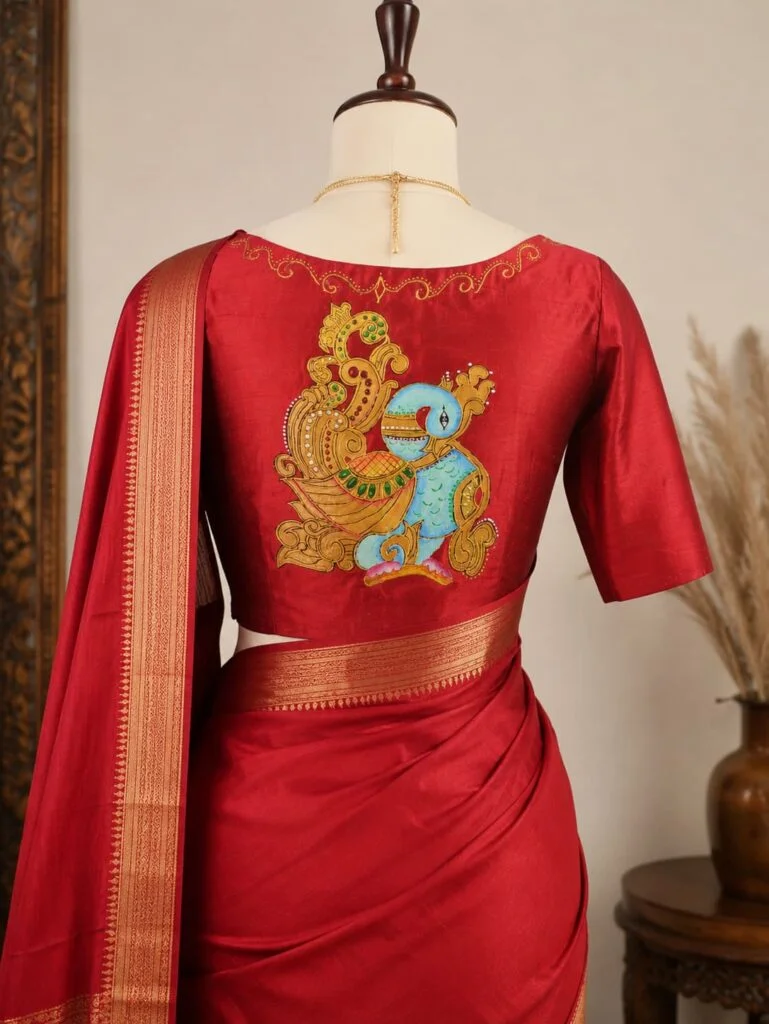
The blouse styled with a red Mysore silk saree.
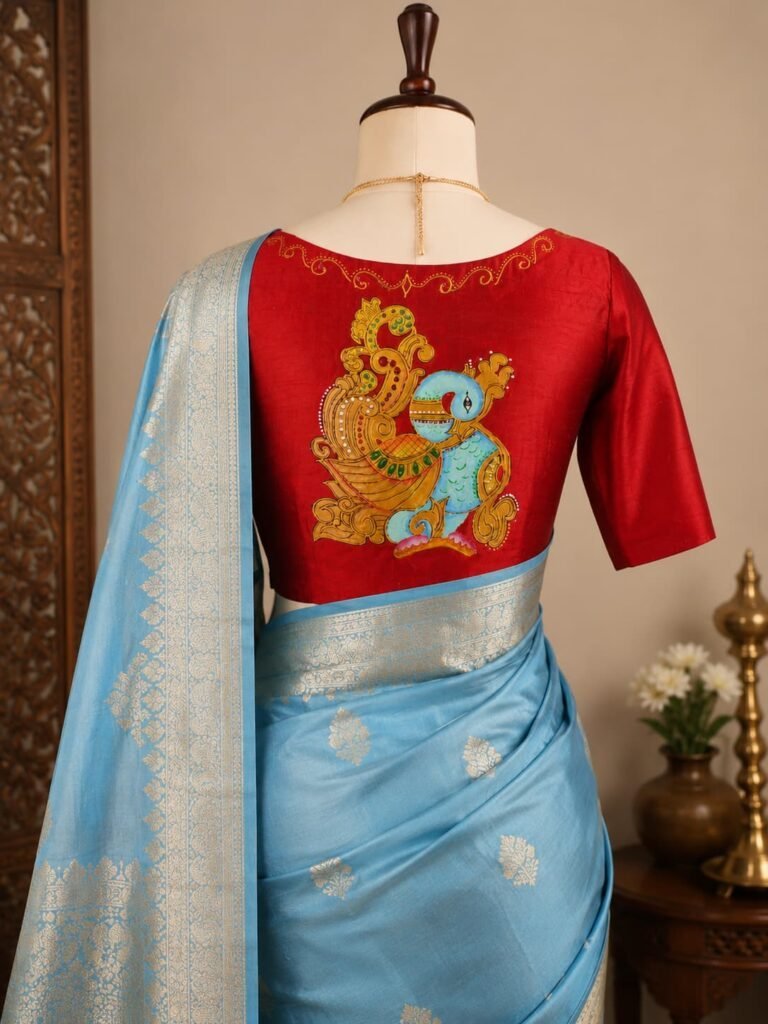
With a Kanchi saree — another traditional South Indian silk, this one from the town of Kanchipuram.
What You Need for Tanjore Painting on Fabric
Here’s the materials list that worked for me:
- Silk blouse (the canvas)
- Fabric paints
- Gold liner — this is what creates those signature outlines
- Brushes in various sizes
- Carbon paper or transfer paper (for tracing the motif)
- Fabric medium (keeps paint flexible after drying)
- Stones, Kundan, and pearl beads for extra detail
- A palette
Caring for a Hand-Painted Blouse
The gold liner outlines are delicate, so handwashing is the way to go. Use a mild detergent and always iron on the reverse side — never press directly over the painted surface.
Frequently Asked Questions
Can Tanjore painting work on fabrics other than silk?
Silk is ideal because of its sheen and smooth surface, but cotton and blended fabrics can work too — you may need to adjust the fabric medium ratio for a softer hand feel.
How long does it take to paint one blouse?
It depends on the complexity of the motif. A single peacock design with gold outlines and bead detailing typically takes several hours spread across a couple of sessions.
Is Tanjore painting suitable for everyday wear?
A hand-painted Tanjore blouse is best reserved for occasions — weddings, festivals, celebrations. With proper care it holds up beautifully over time and actually looks more gorgeous with age.
A Note from Maya
There’s something almost meditative about painting by hand on fabric. You slow down, you pay attention to each brushstroke, and the result feels personal in a way mass-produced pieces never quite do. If you love traditional fashion but want something that’s yours alone, Tanjore painting on silk is worth exploring.
Related reads:
- 10 Capsule Wardrobe Staples I Actually Wear Every Season
- How to Spot Secondhand Pieces Worth the Splurge