I used to buy the trend first and ask questions later. One winter, after layering three actives on top of a new exfoliating acid, I looked in the mirror and barely recognized my own face. Tight. Red. Stinging every time I washed it. Turns out my skin barrier was done taking notes.
Your skin barrier is that outermost layer — the stratum corneum — made of tough cells held together by a lipid matrix of cholesterol, fatty acids, and ceramides. It locks in moisture and keeps irritants like pollution and bacteria out. Without it, even the water inside your body would just evaporate.
When the barrier gets damaged, your skin sends signals: redness you didn’t have before, dry patches, products that suddenly sting, breakouts from nowhere. Over-exfoliation is usually the culprit, but harsh cleansers, weather extremes, hot showers, stress, and even long-term steroid use can all weaken it.
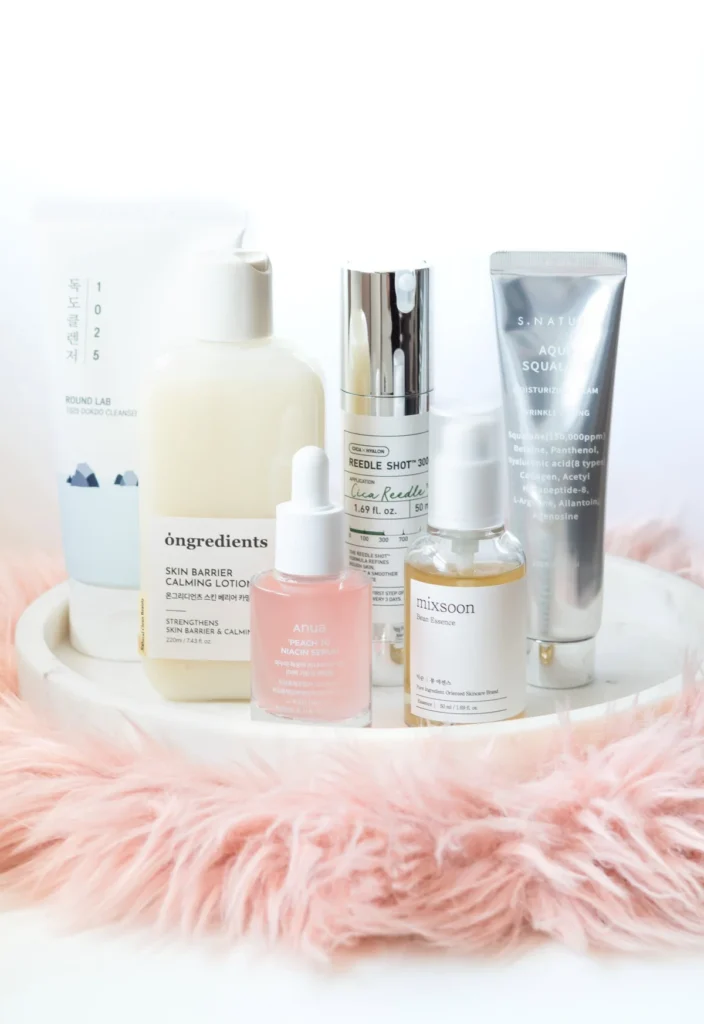
The fix isn’t complicated — but it does mean choosing the right ingredients and giving your skin time to heal. Here’s what I learned, plus the six K-beauty products that got my barrier back on track.
The ingredients that actually matter
Ceramides are the mortar between your skin cells. Research shows that lowered ceramide levels directly impact barrier health. Products with ceramides fill in those gaps so moisture stays put.
Fatty acids — linoleic acid, omega oils — nourish and restore the natural oils you lose from over-washing or cold weather. They work alongside cholesterol to keep the lipid barrier intact.
Humectants pull water into your skin. Hyaluronic acid, glycerin, panthenol (vitamin B5) — all of them make skin feel bouncy and smooth again. Layer them under a richer cream for lasting hydration.
Antioxidants defend against daily stress. Vitamin E, vitamin C, niacinamide, and plant extracts like Centella Asiatica help calm inflammation and support the healing process.
The products I keep reaching for
{{image:cover.webp}}
Round Lab 1025 Dokdo Cleanser
{{image:image-01.jpg}}
This is the cleanser I use every morning when my skin needs a reset. The formula is built around deep-sea water loaded with minerals, plus three types of hyaluronic acid. Panthenol, allantoin, and ceramide NP form a protective layer over your skin instead of stripping it bare.
It foams gently and leaves my face feeling soft — not tight or squeaky clean, just balanced. A small amount goes far. If you don’t wear heavy makeup, it works fine at night too.
The catch: if you wear a full face of makeup, this alone might not cut it as an evening cleanser.
Mixsoon Bean Essence
{{image:image-02.jpg}}
This one does two things at once: hydrates and gently exfoliates. It uses fermented bean extract — a classic K-beauty ingredient — to boost moisture while reducing excess sebum and dead skin cells.
I use it every other night right after cleansing. Massage it in for about 45 seconds to a minute, and you’ll sometimes see little flakes of dead skin come off. Totally normal — just wipe or rinse them away.
The catch: the texture is slightly sticky, similar to snail mucin products. Not a dealbreaker, but worth knowing before you buy.
Anua Peach 70 Niacin Serum
{{image:image-03.jpg}}
This lightweight serum tackles dullness and irritation without overwhelming your skin. It’s packed with 70% peach fruit extract — full of natural antioxidants — plus 5% niacinamide to even out skin tone and reduce dark spots.
I apply it during my night routine, every other day. It absorbs fast and doesn’t feel greasy at all.
The catch: 5% niacinamide is on the higher side. If you’re new to niacinamide, start with twice a week to avoid irritation.
VT Reedle Shot 300
{{image:image-04.jpg}}
If you want barrier repair without layering five different serums, this is the one. It features Centella Asiatica extract and hyaluronic acid delivered through microneedle technology for better absorption. Niacinamide and madecassoside round out the formula.
I use it four or five nights a week — but never on the same night as the Anua serum, since both contain niacinamide. A slight tingling is normal and usually fades quickly.
The catch: that tingling isn’t unpleasant, but some people just don’t like any sensation at all.
Ongredients Skin Barrier Calming Lotion
{{image:image-05.jpg}}
This is my go-to morning moisturizer. It’s formulated with NB P-Complex and a 9-peptide complex, plus Centella Asiatica and Coptis japonica root extracts. The formula is hypoallergenic, vegan, and absorbs quickly without any greasy residue.
I love it beneath makeup — it keeps skin smooth and supple all day without pilling or sliding.
The catch: if you have very dry skin in winter, this might be too lightweight on its own. Layer a cream over it during colder months.
S.Nature Aqua Squalane Moisturizing Cream
This is the night cream I reach for when my barrier needs serious hydration. With 150,000ppm squalane and Aquaxyl — a blend of glucose and xylitol — it locks in moisture all night. My skin wakes up looking plump and calm.
The texture is thicker than the Ongredients lotion, which is exactly why I save it for nighttime. It’s mild and very non-irritating.
The catch: it takes a little longer to absorb compared to lighter formulas. Patience pays off though — by morning, your skin looks noticeably softer.
A few things I wish someone told me sooner
I tend to change my routine more often than my skin likes. When I notice my complexion looking off, I go back to basics: these products above, plus a simple hyaluronic acid serum. Less is genuinely more when your barrier is compromised.
These six products aren’t my complete routine — I alternate them and use most of them every other day rather than all at once. The key is consistency, not quantity.
Frequently asked questions
How long does it take to repair a damaged skin barrier?
It depends on how compromised your barrier is, but most people notice improvement within a few weeks of switching to gentle, barrier-supporting products. Give it time — the stratum corneum renews itself roughly every 28 days.
Can I use actives while repairing my skin barrier?
You can, but go easy. Ingredients like niacinamide actually support barrier repair. Strong exfoliating acids and retinoids are best paused or reduced to once a week until your skin feels stable again.
Is K-beauty suitable for sensitive skin?
Many Korean skincare brands focus on gentle, plant-based formulations that work well for sensitive skin. The products I’ve shared here all prioritize barrier-friendly ingredients over aggressive actives — but always patch-test new products first.
A note from Maya
I spent years thinking more products meant better skin. It took a really rough patch to learn that sometimes the most stylish thing your face can wear is calm, healthy skin. These K-beauty picks are my reset button — and they cost less than one designer coat.