I pulled every pair of jeans out of my closet on a Sunday, laid them in a row, and did the math. Eight years of jeans. Maybe a dozen I still reach for. The rest are trend denim — skinny, acid-washed, whatever was in the racks that year — and none of it survived me.
That’s the thing about denim. It’s the most lived-in fabric in the world, and yet a lot of us treat it like it’s scary. In the sewing world especially: thick, a bit pricey, “technical.” So let’s decode it, the way I wish someone had done for me back when I was a buyer staring at bolts of it every day.
Where Denim Actually Comes From
The origin story is debated, like most textile history. The version I like: a town called Nîmes in France was making the fabric in the 17th century, and the name “denim” comes from serge de Nîmes — serge being the name for the twill weave.
The indigo is the signature move. Weavers dyed only the warp threads blue and left the weft undyed, which is why denim has that two-tone look on the inside of your jeans. That same twill weave is what made it durable enough to start life as boat sails.
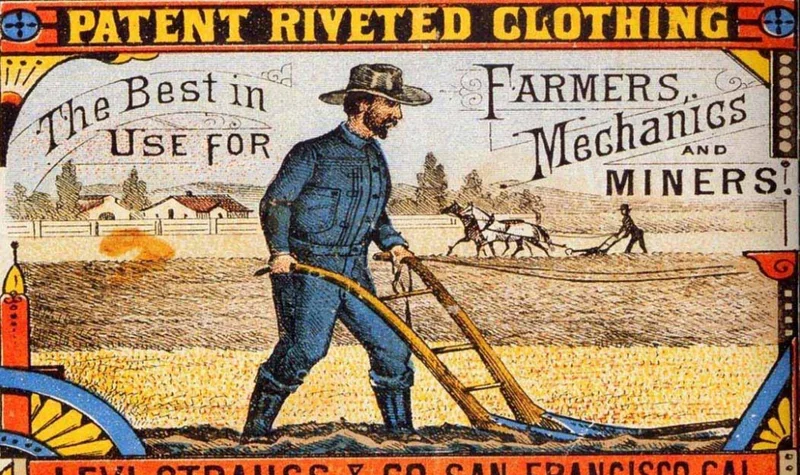
From sails it went to workwear — gold rush America, farmers, miners, railroad crews. Working-class fabric took a while to cross into everyone’s wardrobe. The cowboy myth did the rest: rodeos made it fashionable, Hollywood noticed, James Dean put it on screen, and denim became daily wear for everyone. (Worth knowing: the original cowboys were Mexican — the fabric’s history is messier and more interesting than the brochure version.)
What Makes Denim Denim
Here’s the rule I check every time a fabric looks “denim-ish” in a shop:
- The warp threads are dyed (usually indigo)
- The weft is left raw
- The weave is twill
Miss any one and you’re looking at a twill, not denim. So that single-color fabric that looks like denim? Just twill. Not all twills are denim — but all denim is twill.
The only thing that separates denim types is weight:
- Lightweight — shirting and lighter pieces
- Medium weight — pants and jackets, the everyday zone
- Heavyweight — pants and jackets too, plus bags, upholstery, anything that has to survive abuse
Buying Denim Fabric
I keep a small fabric stash for repairs and simple projects, and the price point is honestly friendly if you buy by the half meter. Here’s what a proper 12oz denim costs, which is the weight I’d reach for first:
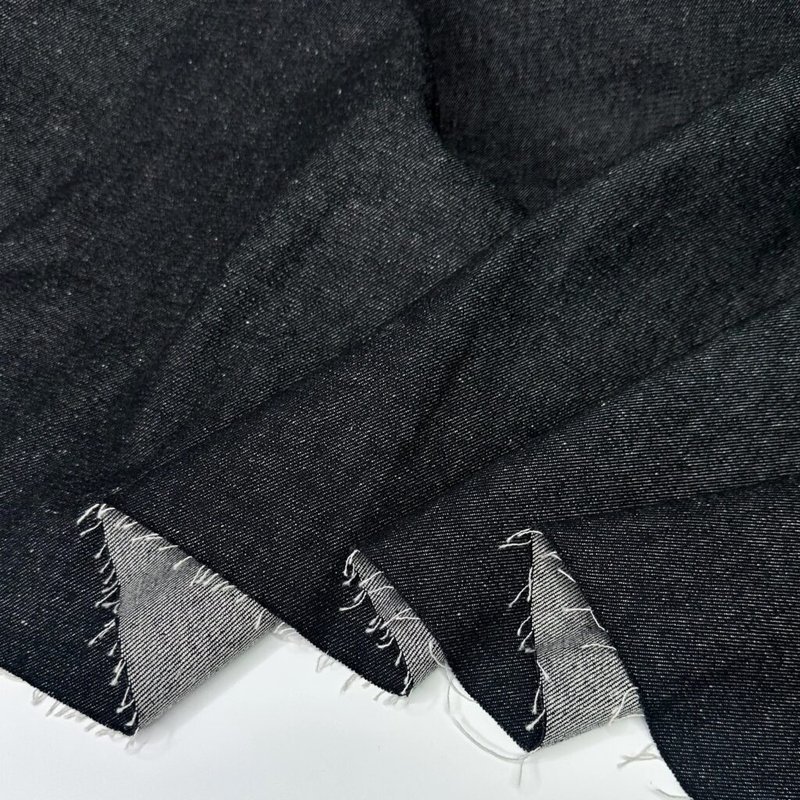
12oz denim in black, dark indigo, or medium blue — $17.00 per 1/2 meter ($34.00 per meter). That’s one pair of jeans’ worth of fabric, give or take, for under the price of one fast-fashion pair.
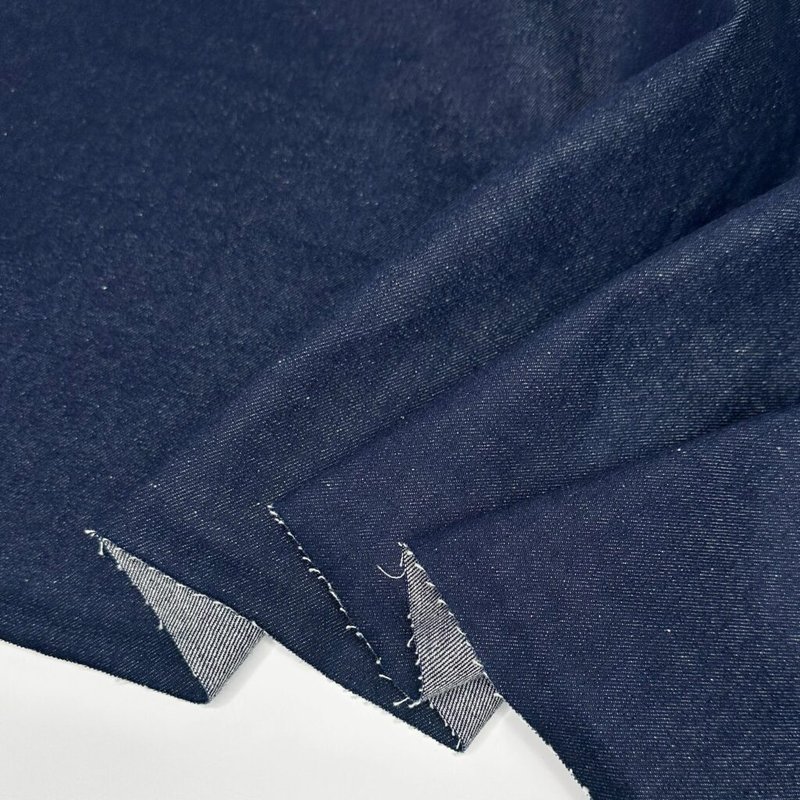
Same 12oz weight comes in a chambray version (medium blue) at the same price: $17.00 per 1/2 meter ($34.00 per meter). Chambray is the softer, lighter-feeling cousin — great for shirting weight projects.
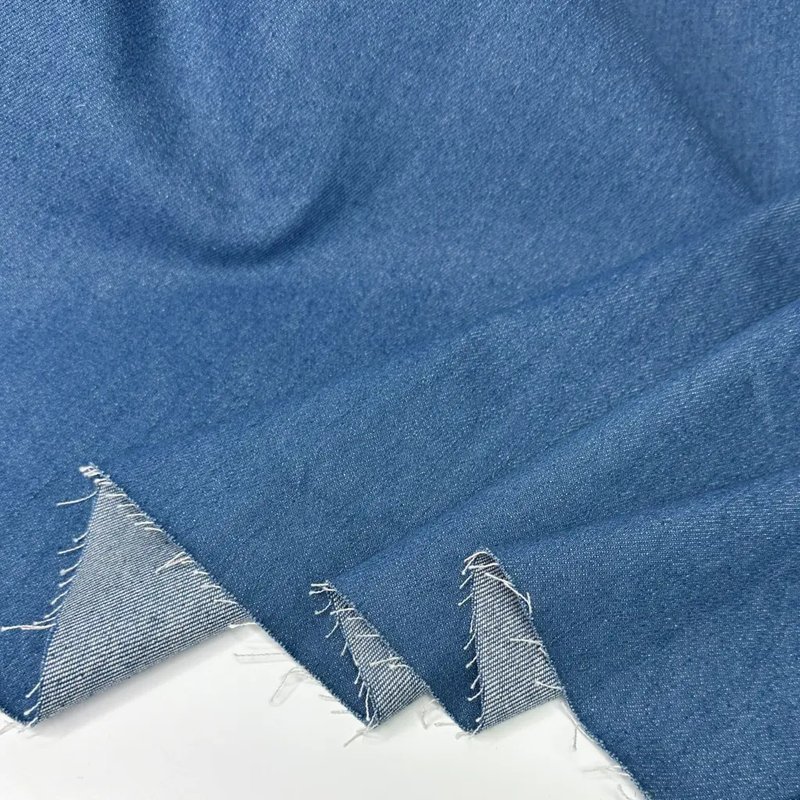
If you’re sewing something that should move with you, stretch denim (9.5oz) is the one — $9.00 per 1/2 meter ($18.00 per meter). You’ll feel the difference the moment you sit down.
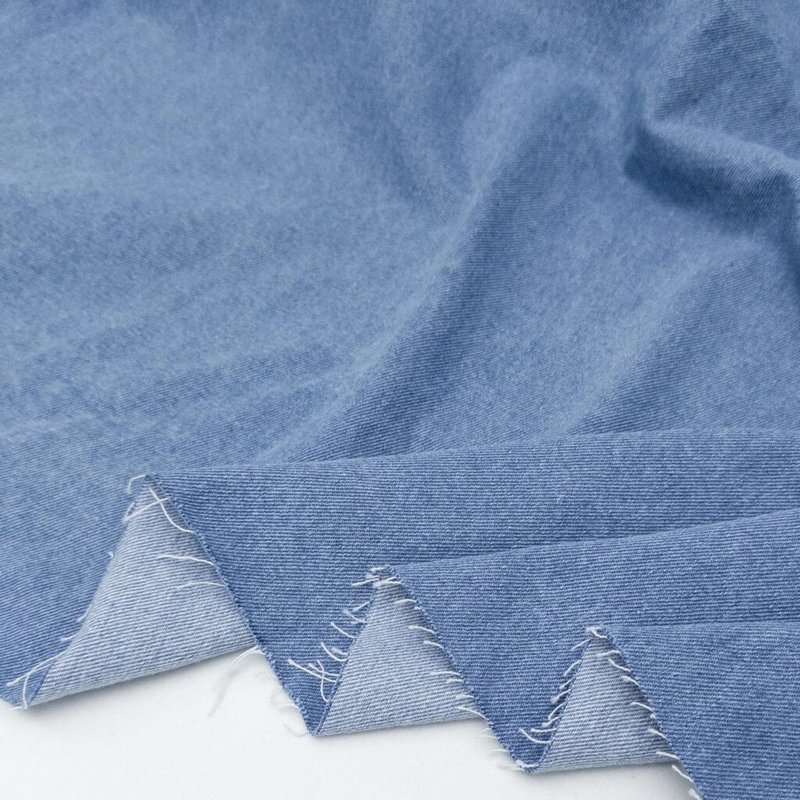
The Tools That Actually Matter
Denim doesn’t need a lot. It needs the right little things:
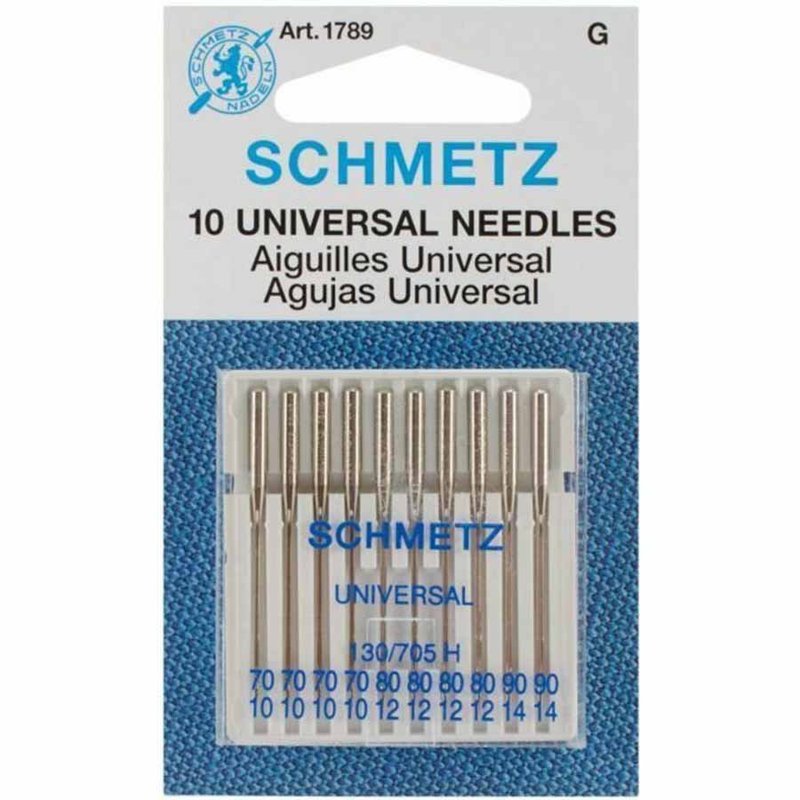
- A fresh, sharp, heavy needle for your machine. Old needle + denim = skipped stitches and a headache. A 10-pack of universal machine needles runs about $14.50, and they last a long time.
- A hammer. Yes, a hammer. As a tailor I learned that pounding thick seams flat before feeding them through the machine saves you a world of frustration.
- Topstitch thread — the raised contrast stitching you see on classic denim work. Denim thread (variegated) if you’re patching.
- Heavy hand needles for any hand-sewn bits — a 7-piece assorted set is a couple of dollars ($2.00) and worth keeping in a drawer.
What to Sew First
If you’ve never sewn denim, don’t start with jeans. Start with a tote bag — simple, straight seams, and you’ll get the hang of feeding thick fabric without the curve of a crotch seam to stress about. Once the machine feels friendly, jeans are the natural next step, and there are plenty of well-reviewed patterns out there if you want a starting list.
One tip from my buying days, translated to the cutting table: buy the denim, then buy the thread to match. The wrong thread is how a great pair of DIY jeans falls apart at the seams by spring.
Style Math: Why Denim Wins
Here’s the math I actually use. A good 12oz denim pair, sewn or bought secondhand, costs you roughly $30-60. Wear it 40 times and it’s $0.75-1.50 per wear. Now compare that to the trend denim I just laid out in my closet — the stuff bought because the trend said so, worn four times, now taking up rail space. Denim isn’t the cheapest fabric you can buy. It’s the cheapest wear you can buy.
FAQ: Denim, Answered
Is denim hard to sew for beginners? It’s the thickness that’s new, not the technique. A fresh heavy needle, slow feed, and a simple first project (a tote) and it’s no harder than any other straight-stitch fabric.
What weight denim should I buy first? 12oz medium weight. It’s the sweet spot for pants and jackets and forgiving enough to learn on.
Is stretch denim easier than rigid? Yes — it gives as you sew it, which means fewer fed-up moments and a more comfortable fit when it’s done. That’s why it’s the cheaper, lower-oz option in any shop.
A note from Maya: I still keep the one pair of 90s vintage jeans I bought secondhand in 2019. They’re the most-worn thing I own, and they outlasted every trend I’ve survived. Denim doesn’t care what’s in this season. That’s exactly why it works.
Related reads: How I Build a 10-Piece Denim Rotation · The Cost-Per-Wear Math Behind My Closet