
I used to buy the trend first and ask questions later. Years of department store buying taught me a different lesson: the most important piece in the room is usually the one you can’t see until you walk in — the rug.
I’ve spent more evenings than I’d like admitting staring at bare hardwood, wondering why a finished room still feels unfinished. The answer, almost every time, is underfoot.

The rug decides what the room is about
When I plan a space now, I start on the floor, not the walls. And I make that call in one of two ways.
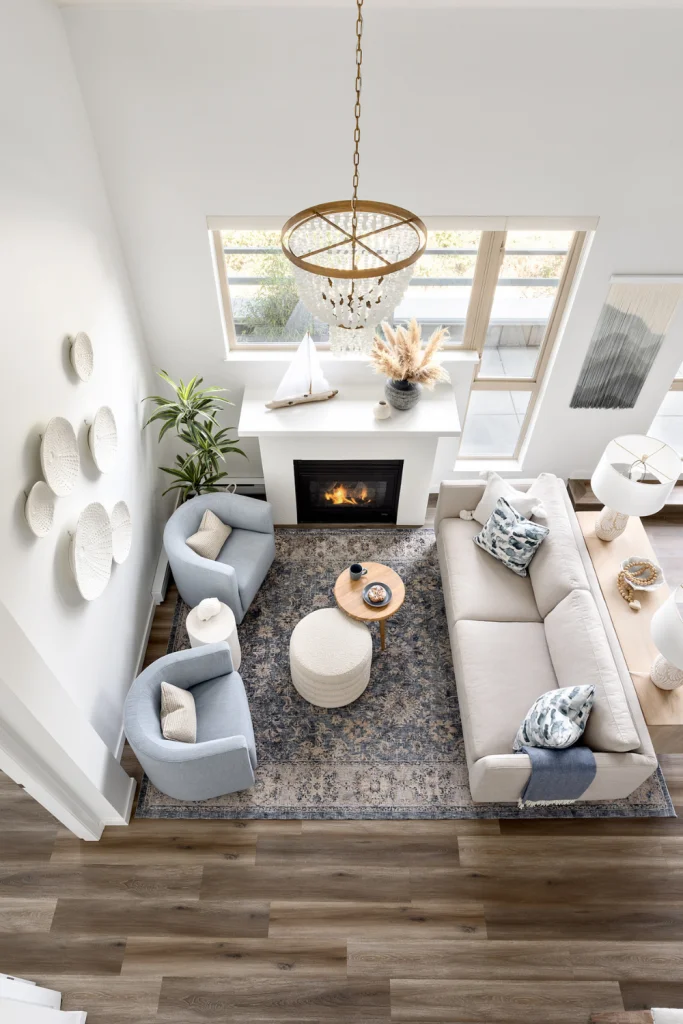
Sometimes the rug leads. Its colours and pattern become the palette everything else pulls from — the artwork, the pillows, the one chair that gets to be weird. In a Vancouver townhome I worked in, a lively patterned rug did exactly that: the walls, the art, and the cushions all followed its tones, and the whole room read as one idea instead of a list of purchases.
Other times the rug plays quiet. A solid or neutral texture lets a piece of art or a statement fabric take the lead while it simply holds the floor together. Both moves work — the only real mistake is choosing without intention.
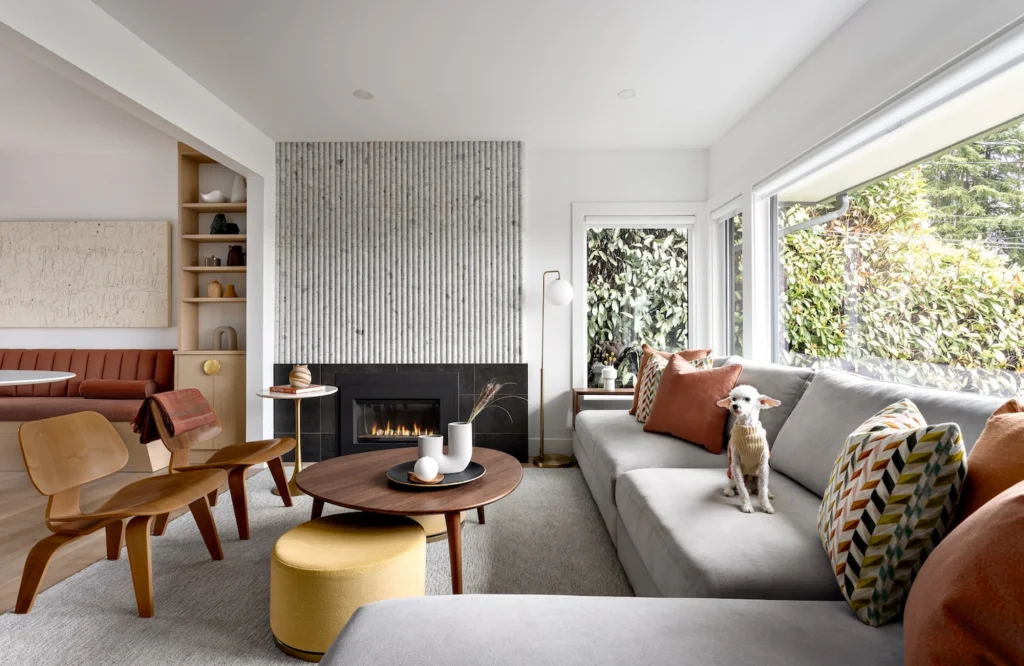
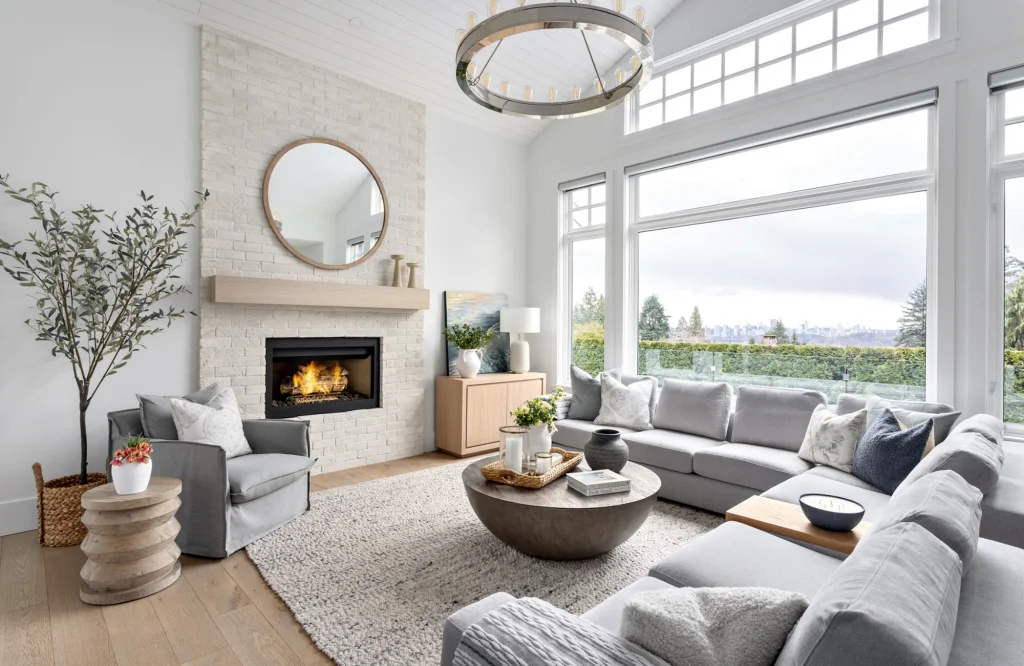
In a West Vancouver living room I was part of, the rug was deliberately understated. Soft, neutral, and just big enough, it grounded the furniture and let the textured fireplace and the earth-toned accents do the talking. Cohesion without the competition.
Scale is where most rooms go wrong
Here’s the part that costs people the most: rugs get bought too small. Same as artwork that hangs too high, an undersized rug makes a room feel fragmented — like nothing quite belongs to anything else.
A generously sized rug does the opposite. It pulls the furniture into one composition and actually makes the space feel bigger.
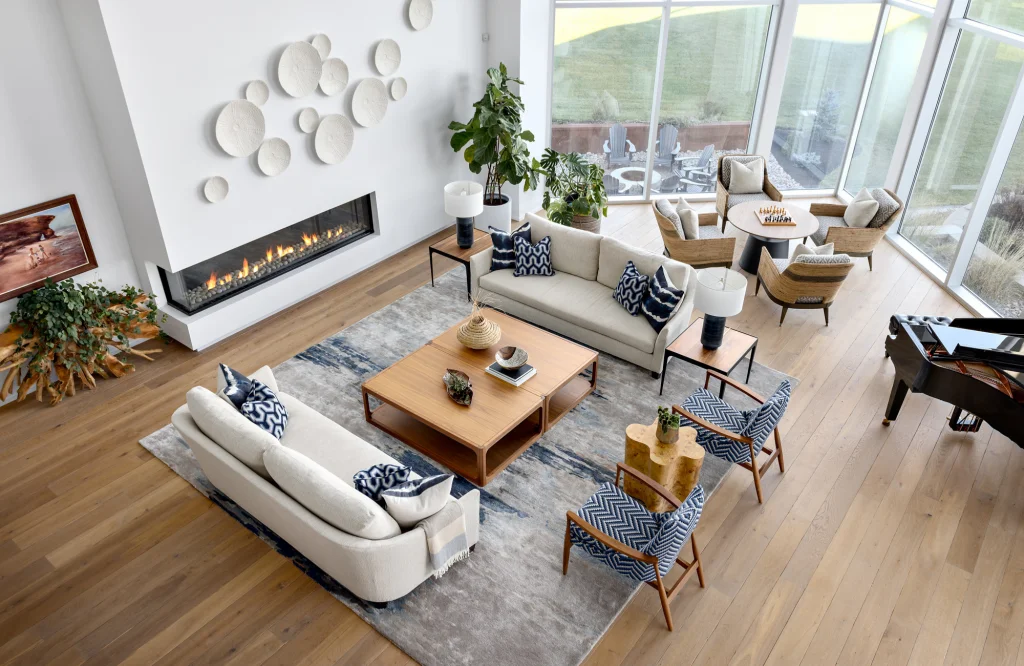
In open-plan homes it goes further: a rug is the cheapest zoning tool you own. In one tall, open-concept space I worked in, a patterned rug extended fully under the sofa and the chairs. It anchored the seating and made that airy room feel intimate instead of echoing.
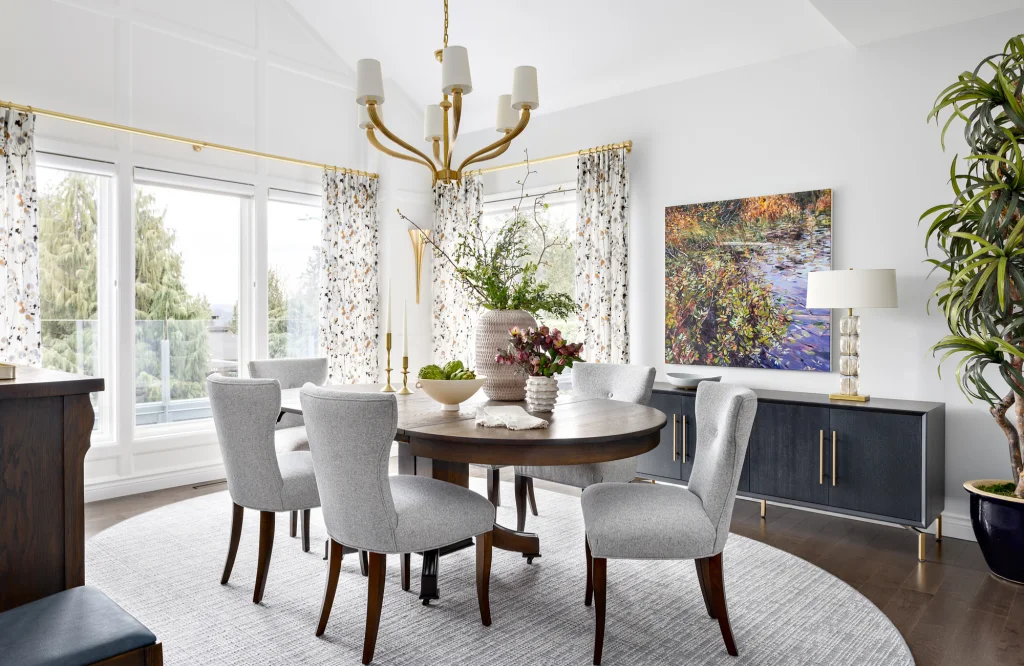
Dining rooms need their own logic. In a traditional dining space in Dollarton, an oval rug was chosen to mirror the table’s shape — but sized so the chairs stay fully on it, even when pulled out. That’s the difference between a rug that works and one you keep apologising to.
Fibre is a lifestyle decision
The price of a rug tracks its material, its origin, and how it’s made. Hand-knotted rugs, usually in fine wool, carry generations of skill and can take months to produce. That investment buys durability and the chance at an heirloom. Machine-made rugs are more accessible and cover a wide range of styles — for most of us, that’s the honest choice.
Wool is the most versatile fibre in my opinion. It’s durable, naturally resilient, and ages well — as long as you keep it away from constant damp and long stretches of direct sun. Cared for, a wool rug can last for generations. It’s my default for high-traffic rooms and family homes.
Silk gives you lustre nothing else matches. It’s also delicate, fades easily, and belongs in quiet rooms where it won’t be walked on like a sidewalk.
Natural fibres like jute and sisal bring real texture, but they’re not soft, they’re not easy to clean, and in damp climates — coastal cities like Vancouver included — mildew is a genuine risk. Beautiful on a mood board, a harder sell in real weather.
Quick notes before you buy
Three rules I keep repeating to clients, and to myself:
- Foundation first. The rug should either start the room’s design or quietly support it — never dabble in between.
- Size generously. A rug that’s too small fragments the room; the right scale anchors the furniture.
- Match fibre to life. Wool for traffic and families, silk for quiet rooms, natural fibres only if your climate forgives them, synthetics when practicality wins.
None of this is about spending more. A rug is one of the most practical purchases you’ll make for your home — it sets the mood, anchors the furniture, and adds comfort you feel every single day. Chosen well, it stops being a floor covering and becomes the foundation of how the room feels.
FAQ
Is an area rug just decorative, or does it do anything else?
It does everything else too. It anchors furniture, defines zones in open-plan layouts, adds warmth and texture, and changes how a room sounds and feels underfoot. Decoration is the part you notice least.
How do I know if my rug is the wrong size?
If the front legs of your sofa float off the edge, or chairs screech on bare floor when you pull them out, it’s too small. Aim for the rug to extend fully under the pieces it’s supposed to hold together.
Which material lasts longest in a busy home?
Wool, by a mile. It’s resilient, it ages gracefully, and with basic care it can last for generations. For very active households, a good synthetic gives you practical durability at a lower price point.
A note from Maya
I still feel the pull to buy the pretty thing first. Now I lay the rug down before anything else, and let it argue with me about colour. It’s usually right.
If you’re starting over a room, you might also like my guides on building a capsule closet and on mixing secondhand with affordable finds.